

Canadian Clinical Guideline
High-Risk Drinking and Alcohol Use Disorder
The first-ever Canadian guideline for treating high-risk drinking and alcohol use disorder was published October 2023.
Developed in partnership between the Canadian Research Initiative on Substance Matters (CRISM) and BC Centre on Substance Use (BCCSU), the guideline provides 15 evidence-based recommendations to reduce harms associated with high-risk drinking and to support people’s treatment and recovery from alcohol use disorder.
The guideline provides recommendations for the clinical management of high-risk drinking and alcohol use disorder to support primary healthcare providers to implement evidence-based screening and treatment interventions.
Developed by a 36-member committee, the guideline is based on the latest evidence, expert consensus, lived/living experience as well as clinical experience from across Canada. It makes recommendations for care providers about how to ask about alcohol, diagnose alcohol use disorder, manage alcohol withdrawal, and create treatment plans based on the individual’s goals.
Update:
In May 2026, screening recommendations for high-risk drinking and alcohol use disorder in the 2023 national clinical practice guideline were updated.
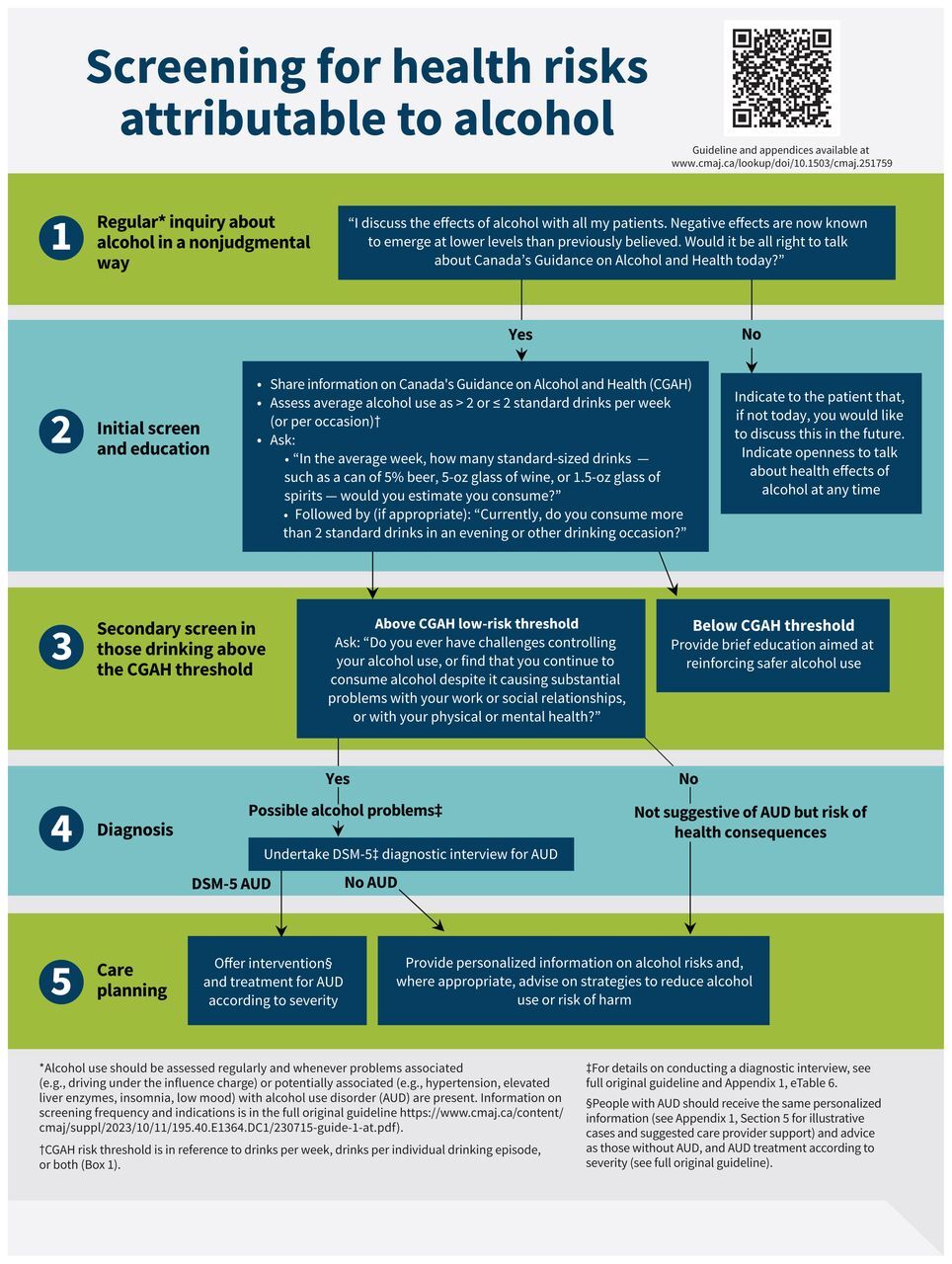
Acknowledging that time constraints are the most commonly reported barrier to universal alcohol screening, the team developed 5 recommendations involving a simple screening method, to identify and address both unhealthy alcohol consumption and more serious problems related to alcohol.
The revised screening recommendations represent a timesaving and pragmatic approach intended to be a resource for universal screening for alcohol risks and problems. A simple screening algorithm is proposed to optimize and tailor further intervention, including when to assess for possible AUD.
These updates are translated for public use on the website, helpwithdrinking.ca, which was developed in 2023 to raise awareness of resources and treatments available to Canadians. These resources provide Canadians with information about what treatments are available for high-risk drinking and how they can be accessed.
To watch a presentation from the Canadian Society of Addiction Medicine (CSAM) conference on the guideline with committee co-chair Dr. Evan Wood click here.
About High-Risk Drinking and Alcohol Use Disorder
High-risk drinking, alcohol use disorder, and alcohol-related harms are common in Canada. Nearly 18% of people aged 15 years or older in Canada will meet the clinical criteria for an alcohol use disorder in their lifetime, and over 50% of people in Canada aged 15 or older currently drink more than the amount recommended in Canada’s Guidance on Alcohol and Health.
Despite the high prevalence of high-risk drinking and alcohol use disorder, these conditions frequently go unrecognized and untreated in the health care system. Even if recognized, alcohol use disorder does not receive evidence-based interventions. It’s estimated that less than 2% of eligible patients receive evidence-based alcohol treatment in the form of evidence-based pharmacotherapies, likely due to low awareness.
Guideline
Additional Resources
Screening for health risks attributable to alcohol
This initiative was funded by a contribution from Health Canada’s Substance Use and Addictions Program (SUAP). The views expressed herein do not necessarily represent the views of Health Canada.